Artículo: Best Sealer for Granite & Quartz: The Complete Guide
Best Sealer for Granite & Quartz: The Complete Guide
Whether you're a professional fabricator, installer, or a homeowner protecting a new countertop investment — choosing the right stone sealer makes all the difference. This guide breaks down everything you need to know.
Do You Actually Need to Seal Stone?
Let's clear this up first.
Granite: Yes — almost always. Granite is a natural, porous stone that absorbs liquids, oils, and stains over time. Without a sealer, you risk permanent discoloration.
Quartz: It depends. Engineered quartz is non-porous by nature, so it doesn't require sealing the way granite does. However, using a quartz-specific enhancer can boost surface protection and bring out depth and color.
Marble, Travertine & Limestone: Absolutely. These are highly porous and vulnerable to etching from acids (think lemon juice, wine, coffee). Sealing is essential.
Porcelain & Sintered Stone (Dekton, Neolith): Generally not needed — these surfaces are virtually non-porous. But grout lines around them? Seal those.
Types of Stone Sealers Explained
1. Penetrating (Impregnating) Sealers
These soak into the stone and create an invisible barrier below the surface. They don't change the look of the stone and are the most common choice for countertops.
✔️ Best for: Granite, marble, limestone, travertine
✔️ Doesn't alter appearance
✔️ Long-lasting protection
Tenax Pick: Proseal Premium Stone Sealer — a professional-grade penetrating sealer trusted by fabricators for high-traffic surfaces.
2. Enhancing Sealers
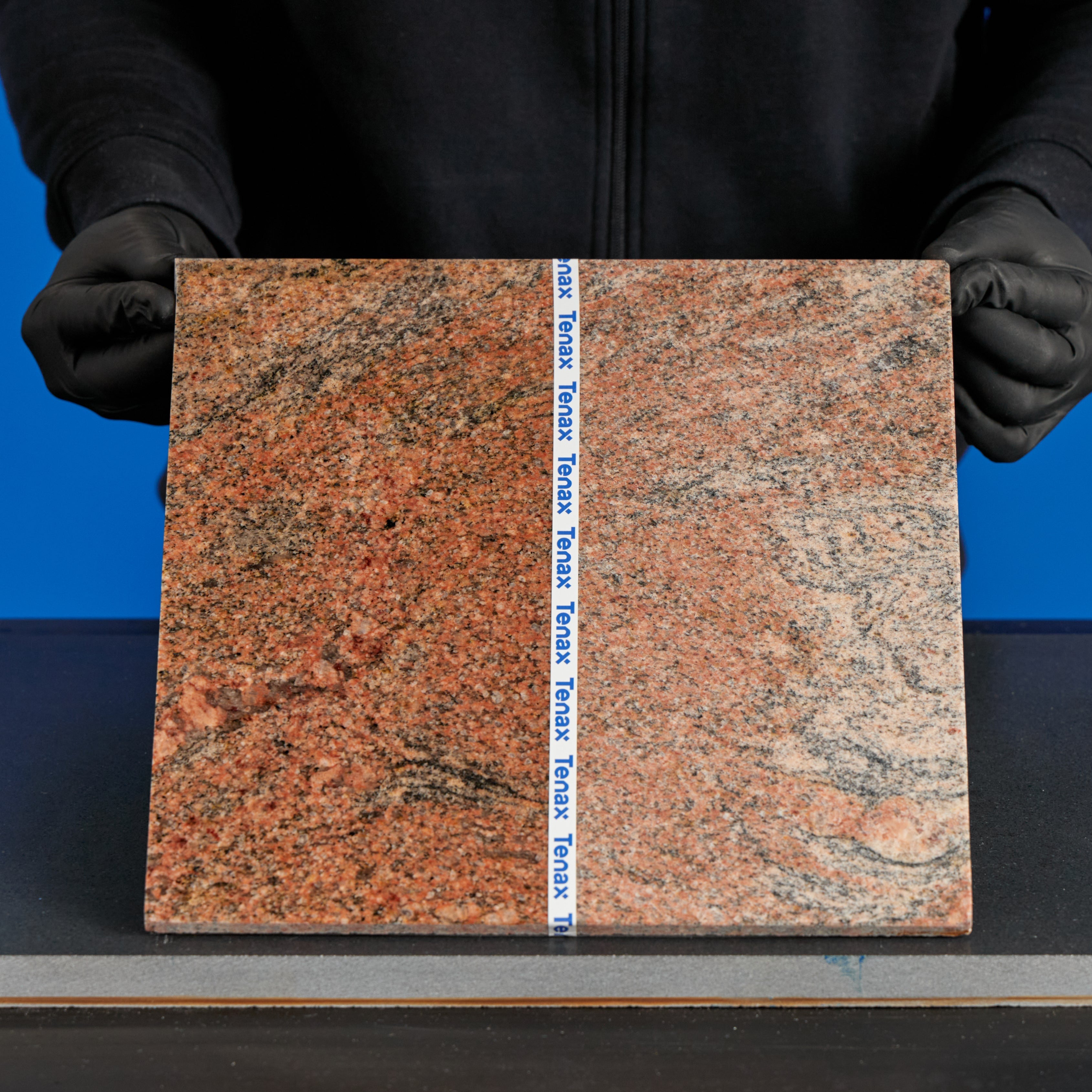
These penetrate the stone and deepen its color, giving it a "wet look" or richer tone. Perfect for exotic granites, leathered finishes, or any stone where you want to bring out natural beauty.
✔️ Best for: Dark granites, exotic stones, leathered/honed finishes
✔️ Adds color depth while protecting
Tenax Picks:
- Ager Stone Enhancing Sealer — the classic choice for color enhancement on natural stone
- Ager Tiger Exotic Natural Stone Sealer — specifically formulated for exotic and highly figured stones
- Quartz Enhancer Stone Sealer — designed specifically for engineered quartz surfaces
3. Nano Sealers
Next-generation technology. Nano-particle sealers penetrate deeper than traditional sealers, offering superior protection with longer intervals between reapplication.
✔️ Best for: High-end projects, commercial applications, busy kitchens
✔️ Longer-lasting than standard sealers
Tenax Pick: Proseal Nano Stone Sealer — advanced nano-technology for maximum, long-lasting protection.
4. Food-Safe Sealers
For kitchen countertops and food prep areas, you need a sealer that's certified safe for contact with food.
✔️ Best for: Kitchen countertops, restaurant surfaces, food prep areas
Tenax Pick: Ager FS Food Safe Stone Enhancing Sealer — enhances color and is food-safe certified. A must for kitchen applications.
5. Surface/Topical Sealers
These sit on top of the stone rather than penetrating it. They can add shine but wear off faster and may require more maintenance.
✔️ Best for: Decorative applications, low-traffic areas
⚠️ Not recommended for high-use countertops
Granite vs. Quartz: Which Sealer Do You Need?
| Stone Type | Sealer Needed? | Best Type | Reapplication |
|---|---|---|---|
| Granite | Yes | Penetrating or Enhancing | Every 1–3 years |
| Quartz | Optional | Quartz Enhancer | As needed |
| Marble | Yes | Penetrating (food-safe for kitchens) | Every 6–12 months |
| Travertine | Yes | Penetrating | Every 1–2 years |
| Porcelain/Sintered | No | N/A | N/A |
| Limestone | Yes | Penetrating | Every 6–12 months |
How to Apply Stone Sealer (Step-by-Step)
- Clean the surface thoroughly — use a pH-neutral stone cleaner and let it dry completely. Residue or moisture will prevent proper penetration.
- Test in an inconspicuous area — especially with enhancing sealers, confirm you're happy with the color effect.
- Apply evenly — use a clean cloth, foam applicator, or sprayer. Work in sections.
- Let it penetrate — follow the product's dwell time (typically 5–15 minutes). Don't let it dry on the surface.
- Buff off the excess — wipe away any remaining sealer before it hazes. This is the most common mistake people make.
- Apply a second coat if needed — highly porous stones may benefit from a second application after the first has cured.
- Allow full cure time — avoid heavy use for 24–48 hours after sealing.
Common Sealing Mistakes to Avoid
- Sealing a wet or dirty surface — moisture and residue block penetration
- Letting sealer dry on the surface — causes hazy, streaky residue that's hard to remove
- Using the wrong sealer for the stone — always match the product to the material
- Over-applying — more isn't better; excess sealer sits on the surface and causes problems
- Skipping the water test — before resealing, drop water on the surface. If it beads, you're still protected. If it absorbs, it's time to reseal.
How Often Should You Reseal?
This depends on the stone, the sealer used, and the level of use:
- High-traffic kitchen granite: Every 1–2 years
- Bathroom granite or marble: Every 2–3 years
- Nano sealers: Often 5+ years between applications
- The water bead test is your best real-world indicator — use it annually
Need to Remove Old Sealer First?
If you're resealing over a surface with old, failing sealer or wax buildup, you'll need to strip it first before applying a fresh coat. Applying new sealer over old buildup leads to poor adhesion and uneven results.
Tenax Pick: Sealer & Wax Remover — effectively strips old sealers and wax so your new sealer bonds properly.
The Bottom Line
Choosing the right sealer comes down to three things: the stone type, the application environment, and the finish you want. For most granite countertops, a quality penetrating sealer is all you need. For exotic stones or leathered finishes, go with an enhancing sealer. For kitchens, always choose food-safe.
Shop Tenax's full line of professional stone sealers → Sealers & Enhancers Collection
Have questions about which sealer is right for your project? Contact our team — we're here to help.