Polyester vs Epoxy: Which Adhesive Should You Use?
Introduction
If you've spent any time in a stone fabrication shop, you know that choosing the right adhesive can make or break a job. Whether you're seaming quartz countertops, repairing a chip in granite, or bonding a sink cutout, the adhesive you reach for matters — a lot.
Two of the most common options in the stone industry are polyester and epoxy adhesives. Both have their place, but they perform very differently depending on the material, application, and environment. In this guide, we'll break down exactly when to use each one — so you stop guessing and start getting perfect results every time.
Polyester Adhesive: Fast, Affordable, and Versatile
What Is Polyester Adhesive?
Polyester-based adhesives are the workhorse of the stone fabrication world. They're solvent-based, fast-curing, and widely used for seaming, filling, and color-matching natural stone and engineered quartz.
Key Advantages of Polyester
- Fast cure time — Most polyester adhesives cure in 5–15 minutes, keeping your shop moving.
- Excellent color matching — Polyester is highly pigmentable, making it ideal for invisible seams in quartz and granite.
- Easy to sand and polish — Once cured, polyester sands cleanly and takes a polish well.
- Cost-effective — Generally less expensive than epoxy, making it practical for high-volume shops.
- Wide material compatibility — Works great on granite, marble, quartz, limestone, and most natural stones.
Limitations of Polyester
- Not ideal for outdoor use — Polyester can yellow or degrade with prolonged UV exposure.
- Lower flexibility — It's more rigid than epoxy, which can be a drawback in high-movement applications.
- Sensitive to temperature — Cold temperatures slow cure time significantly; heat speeds it up.
- Odor — Polyester has a strong styrene smell. Proper ventilation is essential.
Best Uses for Polyester Adhesive
- Seaming quartz and granite countertops
- Filling chips, cracks, and voids in stone
- Color-matched repairs on natural stone
- Indoor fabrication and installation work
Epoxy Adhesive: Strong, Durable, and Moisture-Resistant
What Is Epoxy Adhesive?
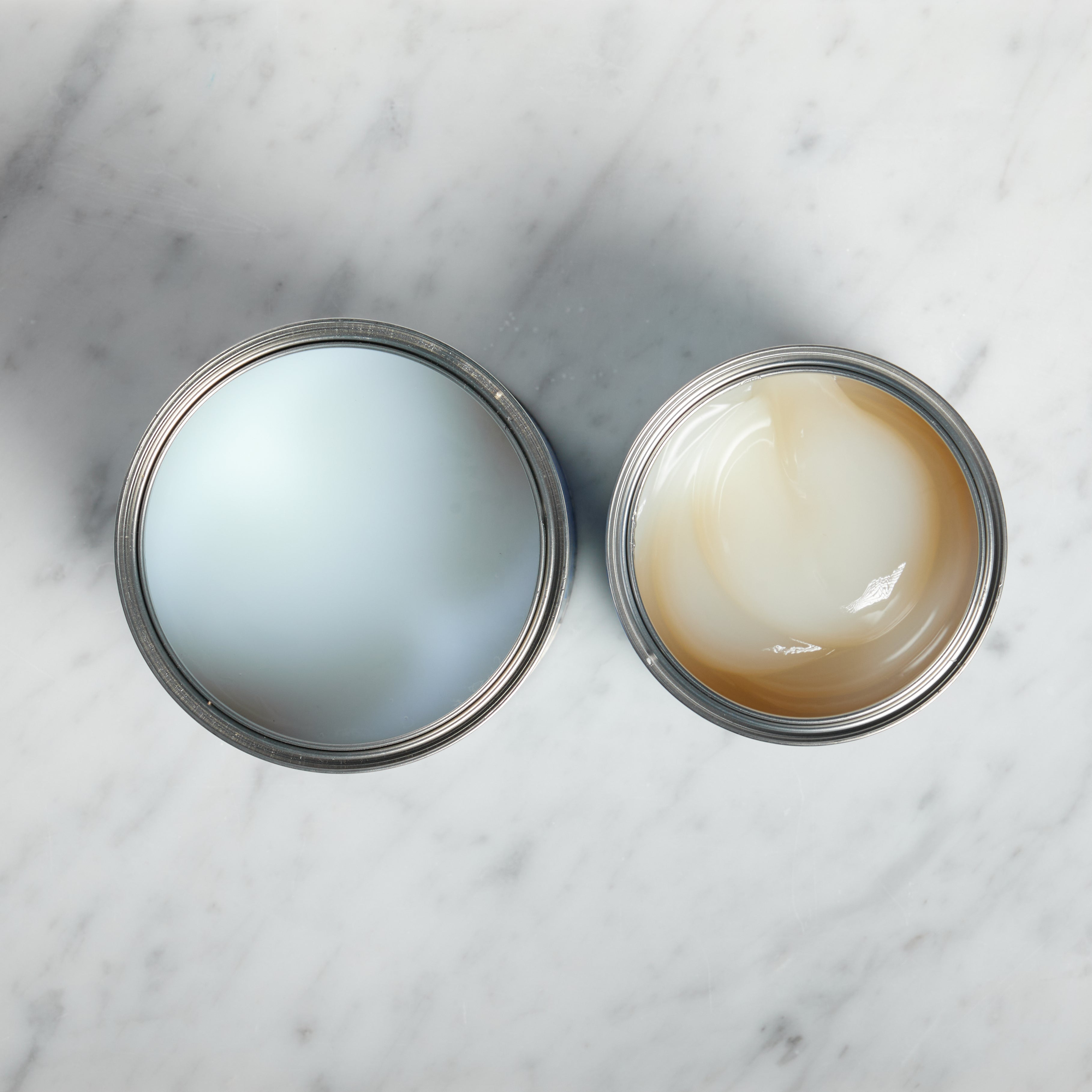
Epoxy adhesives are two-part systems (resin + hardener) that create an extremely strong, chemically resistant bond. They cure slower than polyester but offer superior strength and durability in demanding conditions.
Key Advantages of Epoxy
- Exceptional bond strength — Epoxy creates one of the strongest bonds available, ideal for structural applications.
- Moisture and chemical resistance — Epoxy holds up in wet environments like showers, outdoor kitchens, and pool surrounds.
- UV stability — Many epoxy formulations resist yellowing from sunlight, making them better for exterior applications.
- Flexibility — Epoxy has more give than polyester, reducing the risk of cracking under stress.
- Works on non-porous surfaces — Excellent for porcelain, sintered stone (Dekton, Neolith), and glass.
Limitations of Epoxy
- Slower cure time — Epoxy typically takes 20–60 minutes or longer to cure, slowing production.
- Harder to color match — Epoxy is less pigmentable than polyester, making invisible seams more challenging.
- More expensive — Higher material cost per application.
- Harder to sand — Cured epoxy is tougher and requires more effort to sand flush.
Best Uses for Epoxy Adhesive
- Outdoor countertops, BBQ surrounds, and exterior stone
- Wet areas: showers, steam rooms, pool decks
- Porcelain and sintered stone (Dekton, Neolith, Lapitec)
- Structural bonding and undermount sink installations
- Applications requiring maximum bond strength
Polyester vs Epoxy: Side-by-Side Comparison
| Feature | Polyester | Epoxy |
|---|---|---|
| Cure Time | 5–15 minutes | 20–60+ minutes |
| Bond Strength | Good | Excellent |
| Color Matching | Excellent | Moderate |
| UV Resistance | Poor | Good–Excellent |
| Moisture Resistance | Moderate | Excellent |
| Best For | Indoor seams & repairs | Outdoor & wet areas |
| Works on Porcelain? | Limited | Yes |
| Cost | Lower | Higher |
| Ease of Sanding | Easy | More difficult |
What About Vinyl Ester Adhesives?
There's a third option worth mentioning: vinyl ester adhesives. These sit between polyester and epoxy in terms of performance — offering better chemical resistance than polyester and faster cure times than epoxy. They're a great middle-ground option for applications where you need more durability than polyester but faster turnaround than epoxy.
Tenax offers vinyl ester options for fabricators who need that extra performance edge without sacrificing shop efficiency.
Pro Tips for Getting the Best Results
- Always prep the surface — Clean, dry, and dust-free surfaces bond better regardless of adhesive type.
- Match the adhesive to the environment — Indoor job? Polyester is usually your best bet. Outdoor or wet area? Go epoxy.
- Temperature matters — Cold slows polyester cure dramatically. Use a heat gun carefully or switch to a faster-cure formula in cold shops.
- Color match carefully — Test your color mix on a scrap piece before applying to the seam. Polyester gives you more flexibility here.
- Don't rush the cure — Especially with epoxy. Pulling clamps too early weakens the bond significantly.
The Bottom Line
There's no single "best" adhesive — it depends entirely on the job. Here's a simple rule of thumb:
- ✔️ Use polyester for most indoor seaming, color-matched repairs, and high-volume shop work.
- ✔️ Use epoxy for outdoor projects, wet environments, porcelain/sintered stone, and structural bonds.
- ✔️ Consider vinyl ester when you need a performance upgrade over polyester without the full cure time of epoxy.
Tenax carries a full line of polyester, epoxy, and vinyl ester adhesives — color-matched and formulated specifically for stone fabrication. Browse our adhesive collection to find the right product for your next job.